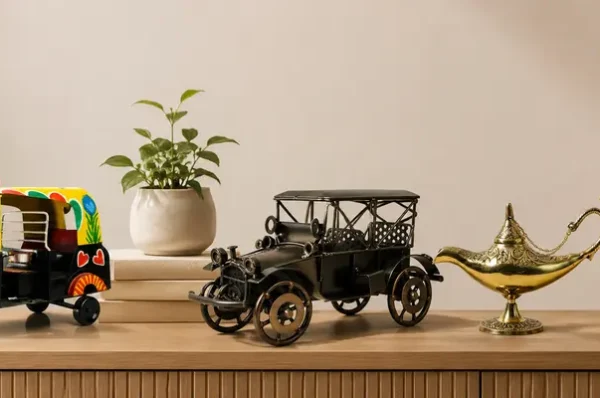
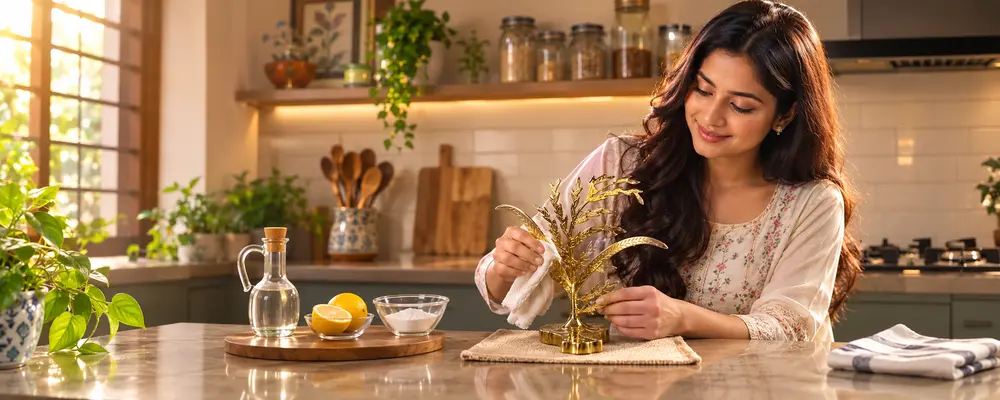
A brass showpiece can instantly add warmth, elegance, and traditional character to a room. However, exposure to air, moisture, dust, fingerprints, and household pollutants can gradually make brass look dull, dark, or uneven.
Fortunately, learning how to clean brass showpiece items is not difficult. In many cases, you can restore their natural glow using a soft cloth, mild dish soap, lemon, salt, baking soda, or a suitable brass polish.
The most important step is identifying the material and finish before cleaning. Solid brass, brass-plated décor, lacquered brass, and antique brass should not all be treated in the same way. Using an aggressive cleaner on the wrong surface may scratch the showpiece, remove its coating, or destroy its original patina.
Brass is primarily an alloy of copper and zinc. It naturally tarnishes when exposed to oxygen, while moisture and oils from handling may accelerate surface discoloration. Tarnishing is normal and does not necessarily mean that the item is damaged.
This guide explains the safest brass showpiece cleaning tips, including how to remove tarnish, prepare a natural brass cleaning solution, use commercial polish, and maintain both modern and antique brass décor.
Before Cleaning: Identify the Type of Brass Showpiece
Before applying vinegar, lemon, baking soda, or metal polish, examine your showpiece carefully.
Solid Brass
Solid brass pieces are generally more suitable for polishing because the same material continues beneath the surface. A magnet that strongly sticks to the item may indicate that the object has a steel or iron base with brass plating.
However, the magnet test is only an initial indicator and is not conclusive for every object.
Brass-Plated Showpieces
A brass-plated item has only a thin brass layer over another metal. Strong rubbing, abrasive powder, rough brushes, or repeated polishing can wear through the plating.
Clean brass-plated décor with:
- A soft microfiber cloth
- Mild dishwashing liquid
- A small amount of lukewarm water
- Gentle pressure
Avoid aggressive tarnish removal unless the product manufacturer specifically confirms that it is safe.
Lacquered Brass
Many decorative brass pieces have a clear lacquer coating that protects the surface from oxidation. If the item has an unusually smooth, glossy coating or the finish appears to be peeling in places, it may be lacquered.
Do not apply acidic homemade cleaners or strong brass polish to damaged lacquer. These products may create uneven patches or make the coating deteriorate further. Expert guidance recommends professional refinishing when lacquer is lifting or breaking down. Antique Brass
Antique brass may have a naturally aged brown, black, greenish, or golden surface called patina. This aged appearance can be part of the item’s beauty, history, and value.
Cleaning an antique does not always mean making it bright and shiny. Heavy polishing may remove its original patina and potentially reduce its collectible value. valuable or historically important pieces, consult a qualified antique dealer, conservator, or metal restoration professional before polishing.
What You Need to Clean a Brass Showpiece
For basic cleaning, prepare:
- Two or three soft microfiber cloths
- A soft-bristled toothbrush
- Mild liquid dish soap
- Lukewarm water
- Cotton buds for detailed areas
- A clean, dry towel
- Lemon and salt, if appropriate
- Baking soda, if appropriate
- White vinegar, if appropriate
- Brass-specific metal polish, if needed
- Protective gloves
Never start with steel wool, a hard brush, sandpaper, scouring powder, bleach, or a highly abrasive cleaning pad. These can permanently scratch decorative metal surfaces.
How to Clean Brass Showpiece: Step-by-Step Method
Step 1: Remove Loose Dust
Begin by wiping the entire showpiece with a clean, dry microfiber cloth.
For carvings, narrow gaps, figurine details, or embossed areas, use a soft brush or dry cotton bud. Removing loose dust first prevents particles from scratching the metal during wet cleaning.
Support delicate parts with your hand while cleaning. Do not hold the showpiece by a thin handle, horn, wheel, wing, or decorative extension.
Step 2: Prepare a Mild Soap Solution
Add a few drops of mild dish soap to a bowl of lukewarm water.
Dip a microfiber cloth into the solution and wring it out thoroughly. The cloth should be damp rather than dripping wet.
Gently wipe the showpiece to remove:
- Dust
- Fingerprints
- Grease
- Smoke residue
- Light surface dirt
- Sticky deposits
A mild soap wash is often enough when the brass is dirty but not heavily tarnished. Expert brass-care guidance recommends removing dirt with mild soap before moving to polishing. Step 3: Clean Detailed Areas Carefully
Dip a soft toothbrush or cotton bud into the soap solution. Gently clean engraved lines, corners, textured surfaces, and decorative details.
Do not scrub aggressively. Intricate showpieces may have delicate joints, painted sections, adhesive, wood, resin, leather, or stone components that should not become saturated.
Step 4: Remove Soap Residue
Use a second clean cloth lightly dampened with plain water to remove the remaining soap.
Avoid placing the entire showpiece under running water unless the manufacturer confirms that it is safe. Prolonged exposure to water can contribute to brass ageing, and soaking may damage hollow, assembled, lacquered, or mixed-material décor. Step 5: Dry Immediately
Dry the item thoroughly with a soft towel.
Pay special attention to joints, grooves, holes, the underside, and recessed areas where moisture may remain. Allow the item to air-dry completely before returning it to a shelf or display cabinet.
Never leave a brass showpiece wet.
How to Polish Brass Showpiece at Home Naturally
If mild soap removes the dirt but the item still looks dull, you may use a natural brass cleaning solution—provided the showpiece is solid, unlacquered brass and does not have a deliberately aged finish.
Always test the method on a small, hidden area first.
Method 1: Lemon and Salt Brass Cleaner
Lemon and salt is one of the most popular household solutions for brass shine and light oxidation removal.
Instructions
- Cut a lemon in half.
- Sprinkle a small amount of fine table salt over the cut surface.
- Gently rub it over the tarnished brass.
- Use light pressure and work on one small section at a time.
- Wipe away the mixture.
- Remove the residue with a damp cloth.
- Dry the item immediately.
- Buff gently with a clean microfiber cloth.
The acid in lemon helps loosen tarnish, while salt provides mild cleaning action. This method is also recommended in Artisoria’s general brass-care guidance. not use coarse salt because the larger crystals may scratch polished surfaces.
Method 2: Lemon and Baking Soda Paste
A vinegar baking soda brass search is common, but lemon and baking soda usually create a more manageable paste for targeted cleaning.
Instructions
- Mix the juice of half a lemon with approximately one teaspoon of baking soda.
- Stir until a soft paste forms.
- Apply a thin layer with a microfiber cloth.
- Rub gently in small circular movements.
- For stronger tarnish, leave it for a short period while observing the surface.
- Wipe off the paste.
- Rinse the cloth and remove all residue.
- Dry and buff the brass.
Lemon-and-baking-soda paste is a commonly recommended homemade brass cleaner, but acidic or mildly abrasive mixtures should not be used on lacquered, plated, or antique finishes without confirmation. Method 3: Vinegar, Flour, and Salt Paste
This method can help remove tarnish from brass with a relatively even application.
Instructions
- Mix equal amounts of white vinegar, flour, and fine salt.
- Stir until a smooth paste forms.
- Apply a thin layer to the tarnished areas.
- Allow it to sit briefly.
- Remove the paste gently with a damp cloth.
- Make sure no mixture remains in grooves or carvings.
- Dry thoroughly.
- Buff with a soft cloth.
Some cleaning instructions recommend leaving this mixture for up to an hour on suitable solid brass. However, for an unfamiliar showpiece, begin with a much shorter contact time and check the surface frequently. Do not combine vinegar and baking soda in advance and store the mixture.
Their reaction reduces the acidity and creates gas, making the mixture unsuitable for storage in a sealed container.
Using Commercial Brass Cleaner for Home Décor
A commercial brass cleaner for home decor can be useful when natural methods do not remove stubborn tarnish.
Choose a product specifically labelled for brass. Read the instructions and check whether it is suitable for:
- Solid brass
- Brass plating
- Lacquered brass
- Antique finishes
- Decorative objects
How to Use Brass Polish Safely
- Wear gloves and work in a ventilated area.
- Test the polish on a hidden spot.
- Apply a very small amount to a soft cloth.
- Rub gently instead of pressing hard.
- Work on one section at a time.
- Remove all remaining polish with a separate clean cloth.
- Buff lightly until the desired finish appears.
Do not apply polish directly into deep carvings. Dried polish may collect in the details and leave a white or dark residue.
Commercial brass polish should not be used more often than necessary. Frequent polishing can gradually alter plated, engraved, coloured, or deliberately aged surfaces.
How to Clean Antique Brass Safely
When considering how to clean antique brass, the objective should usually be preservation rather than maximum shine.
Use this conservative process:
- Dust with a soft, dry brush.
- Wipe gently with a slightly damp microfiber cloth.
- Use diluted mild soap only when needed.
- Remove the soap with another lightly dampened cloth.
- Dry the item completely.
- Stop if the finish begins changing unexpectedly.
Do not automatically remove every dark or greenish area. A stable brass patina may be intentional and desirable.
However, powdery, flaky, expanding, or actively changing green deposits may indicate more serious brass corrosion rather than normal surface ageing. A professional conservator should inspect valuable pieces showing these signs.
Common Brass-Cleaning Mistakes to Avoid
Using Harsh Chemicals
Bleach, toilet cleaner, oven cleaner, strong acids, and industrial degreasers may damage brass and surrounding decorative materials.
Scrubbing with Abrasive Tools
Hard brushes, rough sponges, scouring powders, and coarse steel wool may leave permanent scratches.
Soaking the Entire Showpiece
Decorative pieces may contain hollow sections, screws, adhesives, felt bases, paint, wood, or internal iron components. Soaking can trap moisture and cause hidden damage.
Leaving Acidic Cleaner Too Long
Lemon and vinegar can help with oxidation removal, but excessive exposure may create uneven colour or damage a sensitive finish.
Polishing a Brass-Plated Item Aggressively
Once thin brass plating has worn away, ordinary cleaning cannot restore it. The object may require professional replating.
Removing Antique Patina Without Checking
An old brass item does not need to look new. Its patina may be an important part of its design and value.
Brass Showpiece Maintenance Tips
Good brass showpiece maintenance reduces the need for heavy cleaning.
- Dust the showpiece every one or two weeks.
- Wipe fingerprints away after handling.
- Keep it away from leaking windows and humid corners.
- Do not place it directly beside a kitchen stove.
- Avoid displaying it where water regularly splashes.
- Use clean, dry hands or cotton gloves when handling valuable pieces.
- Keep the item on a dry, stable surface.
- Do not wrap brass directly in damp paper or acidic newspaper.
- Inspect lacquered items for peeling or cloudiness.
- Polish only when tarnish affects the appearance.
Artisoria also recommends regular cleaning, soft-cloth polishing, avoiding harsh chemicals, and storing brass items in a dry location. more décor options, explore Artisoria’s brass showpiece and brass craft collection, which includes decorative sculptures, candle holders, figurines, traditional objects, and other brass items.
The collection combines traditional craftsmanship with contemporary home décor styles. a different vintage metal aesthetic, the Collectible Motorcycle Art Sculpture can complement brass and industrial-style décor.
Because it is described as a retro wrought-iron design, follow its specific material-care instructions rather than treating it automatically as solid brass.
Read also: Resin vs Brass Showpiece: Which Is Better?
How Often Should You Clean a Brass Showpiece?
There is no fixed schedule for every item.
As a practical routine:
- Light dusting: Every one or two weeks
- Damp-cloth cleaning: Every one to three months
- Tarnish removal: Only when visibly necessary
- Deep polishing: As infrequently as possible
A showpiece displayed in a humid room, near a busy road, or close to a kitchen may require more frequent cleaning. An item kept inside a closed display cabinet may need only occasional dusting.
Regular gentle care is safer than waiting until heavy tarnish requires aggressive polishing.
Final Thoughts
Understanding how to clean brass showpiece items begins with identifying the finish. Mild soap and a soft cloth are the safest starting points for most décor. Lemon, salt, baking soda, vinegar, or commercial brass polish may help restore a suitable solid-brass surface, but they should be used carefully.
Avoid soaking, harsh chemicals, rough scrubbing, and unnecessary polishing. Most importantly, do not remove an antique brass patina simply because it is dark. Sometimes that aged finish is exactly what gives the showpiece its depth and character.
With regular dusting, immediate drying, careful handling, and occasional gentle polishing, your brass showpiece can maintain its distinctive golden beauty for many years.