
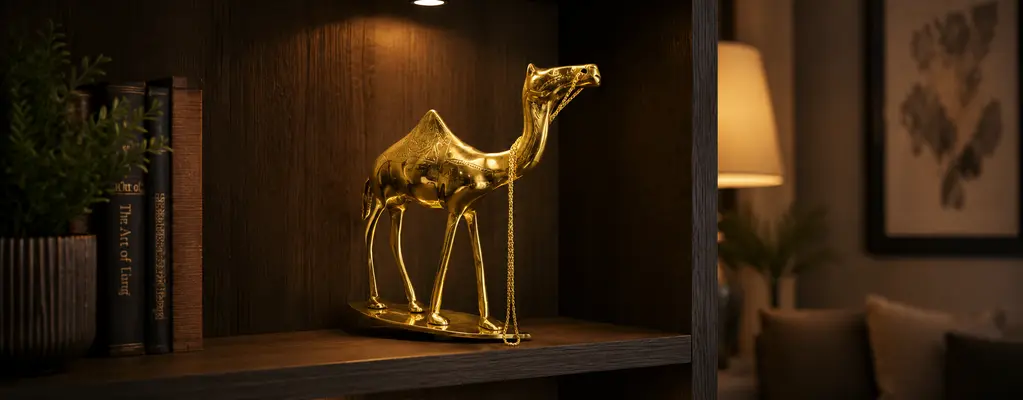
Sculptures can transform an ordinary shelf into an attractive focal point. Whether you display abstract art, animal figurines, handmade crafts, travel souvenirs, or family collectibles, thoughtful placement helps each piece receive the attention it deserves.
However, arranging sculptures is not simply a matter of placing several decorative objects in a row. When pieces are too close together, the shelf can look crowded. When they are spaced too far apart, the arrangement may appear disconnected. Using objects of the same size and height can also make the display feel flat and repetitive.
Learning how to arrange sculptures on a shelf involves creating a relationship between scale, shape, colour, direction, spacing, and surrounding objects. The objective is to achieve visual balance without making the shelf look overly planned or symmetrical.
This guide explains practical sculpture shelf arrangement ideas, including how to work with different sizes, create height variation, group decorative objects, mix materials, and use negative space effectively.
Start by Emptying the Shelf
Before styling, remove everything from the shelf.
Trying to improve an existing arrangement one object at a time can be difficult because the current display influences every decision. Starting with an empty surface allows you to reconsider the shelf’s complete composition.
Place all potential display items on a table or the floor where you can see them together. These may include:
- Sculptures and figurines
- Books
- Framed photographs
- Vases
- Small plants
- Decorative boxes
- Candles
- Bowls
- Artwork
- Travel souvenirs
You do not need to return every item to the shelf. A curated shelf look depends on selection. Choose objects that have meaning, visual interest, or a clear relationship with the room.
Choose a Main Sculpture as the Visual Anchor
Every successful shelf arrangement benefits from a visual anchor. This is usually the largest, tallest, darkest, or most detailed sculpture in the display.
Place the main sculpture first. Depending on the shelf’s dimensions, it may sit:
- Near the centre
- Slightly to one side
- At one end of the shelf
- In front of a framed artwork
- Beside a short stack of books
Avoid automatically placing the main piece exactly in the middle. An off-centre position often creates a more relaxed and natural composition.
Once the anchor is positioned, add smaller pieces that support it rather than compete with it.
Use the Rule of Odd Numbers in Décor
The rule of odd numbers decor technique involves arranging objects in groups of three, five, or another odd number.
A group of three is an easy starting point because it provides enough variation without occupying too much shelf space. Interior designers commonly use groups of three with differences in scale, form, or height to create a unified but visually interesting arrangement.
For example, group:
- One tall sculpture
- One medium-sized vase
- One small decorative bowl
You can also create a sculpture-focused group with:
- One standing figurine
- One seated figurine
- One small abstract object
Odd-number grouping is a guideline rather than a strict rule. Two matching sculptures may work well as a pair, especially when placed on opposite sides of a central object. A collection of four related pieces can also look attractive when separated into two smaller groups.
Create Height Variation
One of the most important showpiece display tips is to avoid placing every object at the same height.
A shelf filled with equally tall sculptures may resemble a shop display. Height variation makes the arrangement feel layered and encourages the eye to move naturally across the shelf.
You can create height variation decor by combining:
- Tall and short sculptures
- Upright and horizontal objects
- Standing and seated figurines
- Books placed vertically and horizontally
- Small objects elevated on book stacks
- Sculptures with framed artwork behind them
Place a small sculpture on two or three stacked books when it needs additional height. The books act as a simple pedestal and visually connect reading material with decorative art.
Avoid creating a perfectly predictable pattern such as tall, short, tall, short. Vary the placement so the display feels intentional without appearing mechanical.
Arrange Sculptures in a Visual Triangle
The visual triangle is an effective decor grouping technique for three objects of different heights.
Place the tallest object at the back or side. Position a medium-height sculpture nearby, followed by the smallest object slightly forward. The top points of the objects should form an imaginary triangle.
This arrangement creates depth and helps three separate objects appear as one composition.
For example:
- Place a tall abstract sculpture at the back left.
- Add a medium figurine toward the right.
- Position a small bowl or decorative accent in front.
The objects can overlap visually, but they should not hide important details from one another.
Balance Visual Weight Across the Shelf
Visual balance styling does not require placing identical objects on both sides. Instead, it means distributing visual weight so one area does not feel unusually heavy or crowded.
Visual weight is influenced by:
- Size
- Colour
- Shape
- Texture
- Detail
- Material
- Position
A large black sculpture may carry as much visual weight as several small light-coloured objects. A highly detailed figurine may attract more attention than a larger but simpler vase.
When one side contains a bold sculpture, balance it with a small group of books and accessories on the other side. The objects do not need to match; they only need to create a sense of equilibrium.
Step back several feet after arranging the shelf. Look at the entire composition rather than focusing on one object. This makes imbalance easier to identify.
Leave Enough Negative Space
Empty space is an active part of shelf design. Negative space styling gives the eye somewhere to rest and allows the shape of each sculpture to remain visible.
You do not need to fill every centimetre. Designers frequently recommend treating blank space as seriously as the displayed objects because breathing room helps shelves feel relaxed and intentional.
Leave more open space around:
- Your main statement sculpture
- Highly detailed figurines
- Delicate wire sculptures
- Valuable collectibles
- Pieces with unusual silhouettes
A shelf filled from edge to edge can make even beautiful sculptures difficult to appreciate.
As a general starting point, leave approximately 5 to 15 centimetres between individual objects, depending on their size. Larger sculptures usually need more space. Smaller objects can sit closer together when they form a deliberate group.
There is no universal measurement. Judge the spacing from normal viewing distance rather than only while standing directly in front of the shelf.
How to Style a Bookshelf With Sculptures
When considering how to style a bookshelf with sculptures, remember that books should remain useful as well as decorative.
Combine vertical and horizontal book arrangements. Vertical books provide structure, while horizontal stacks can serve as platforms for smaller sculptures.
Try these combinations:
- Vertical books with a sculpture acting as a bookend
- A sculpture placed on top of three horizontal books
- Framed artwork behind a sculpture
- A vase beside a short book stack
- A figurine positioned between two groups of books
Do not turn every book backwards simply to create a neutral colour palette. A well-styled bookshelf should still allow you to identify and access the books.
Repeat selected colours or materials across different shelves to create continuity. For instance, a black metal sculpture on the upper shelf can connect visually with a black picture frame on the shelf below.
Shelf Décor With Figurines
Small figurines can add personality, but too many tiny pieces may make a shelf look fragmented.
For effective shelf decor with figurines, avoid scattering small objects evenly across the entire shelf. Instead, organise them into purposeful collections.
You might group figurines by:
- Subject
- Colour
- Material
- Country of origin
- Artistic style
- Personal meaning
A collection of musical figurines can be arranged as a miniature performance scene. Position the pieces so they appear to interact rather than simply standing in a straight line.
The Abstract Musician Sculptures provide a useful example. The collection includes three hand-welded, matte-black metal musicians—a guitarist, drummer, and saxophonist. Each figure measures approximately 8 inches high and 6 inches wide and has a stable flat base, making the set suitable for grouped or individual shelf placement.
To display this set, place the drummer slightly behind the other two figures, with the guitarist and saxophonist angled subtly toward the centre. This creates the impression of a connected musical performance.
For a wider shelf, the three pieces can be distributed across separate zones while repeating black accents through books, frames, or other decorative objects.
Should Sculptures Face the Same Direction?
Sculptures do not need to face the same direction.
When every figurine faces forward, the arrangement may look formal or static. Turning selected sculptures slightly inward can create interaction and movement.
Consider the subject of each piece:
- Human or animal figures can face toward one another.
- A musician set can be arranged as a performance.
- A running animal may face toward the open area of the shelf.
- An abstract sculpture can be rotated to reveal its strongest silhouette.
- A figure placed at the shelf’s edge should usually face inward rather than appear to move out of the display.
Avoid turning all pieces in unrelated directions. Their orientation should create a visual flow that guides the eye through the arrangement.
Can You Mix Different Sculpture Materials?
Yes, mixing materials can make a shelf more interesting.
You can combine:
- Metal
- Wood
- Ceramic
- Glass
- Stone
- Resin
- Brass
- Terracotta
The materials do not need to match exactly, but the arrangement should contain at least one connecting element.
That connection might be:
- A shared colour
- A similar theme
- Repeated shapes
- Comparable craftsmanship
- A consistent interior style
For example, combine a black metal sculpture with a wooden bowl and a ceramic vase in a neutral colour. The contrast between matte metal, natural wood, and smooth ceramic adds texture without creating visual chaos.
Limit the colour palette when mixing many materials. Too many colours, patterns, finishes, and themes on the same shelf may make the arrangement feel disconnected.
Shelf Styling for Collectibles
Good shelf styling for collectibles balances presentation with protection.
Valuable or fragile pieces should be positioned:
- Away from shelf edges
- Below the maximum weight limit
- Out of direct sunlight
- Away from strong heat and humidity
- Beyond the reach of children or pets
- On stable, level surfaces
Use museum putty or removable display adhesive for lightweight sculptures that could easily fall. Confirm that the product is suitable for both the sculpture’s base and the shelf finish.
For a large collection, avoid displaying everything at once. Rotate pieces every few months. Rotation reduces clutter and gives each item an opportunity to become the main focus.
How to Group Decorative Objects
When learning how to group decorative objects, begin with a shared relationship.
Objects can be grouped through similarity or contrast.
Group by Similarity
Combine objects that share:
- Colour
- Material
- Theme
- Shape
- Period
- Cultural origin
Group by Contrast
Combine objects that differ in:
- Height
- Texture
- Shape
- Finish
- Visual weight
A successful group often uses both approaches. Three sculptures may share the same colour but have different heights and poses.
Keep objects close enough that viewers recognise them as one group. Then leave more space before the next group begins. This creates clear visual zones across the shelf.
Common Sculpture Shelf Arrangement Mistakes
Placing Everything in One Straight Line
A straight row removes depth and can make the shelf look like a retail display. Move selected objects slightly forward or backward.
Using Only Small Objects
Many tiny objects create visual noise. Include at least one medium or large piece to anchor the arrangement.
Filling Every Empty Area
Blank space is not unfinished space. It helps important sculptures stand out.
Using Too Many Themes
A shelf combining animals, vehicles, religious items, abstract sculptures, travel souvenirs, and unrelated colours may lack focus. Edit the selection or divide it into separate shelf zones.
Making Every Shelf Identical
Repeating the same arrangement on every level can look rigid. Vary the number, scale, and placement of objects while maintaining a consistent colour or material connection.
Ignoring the Viewing Angle
A sculpture may look attractive from the front but awkward from the room’s main seating area. Rotate each piece while viewing it from different positions.
A Simple Shelf-Styling Formula
Use this practical formula when you are unsure where to begin:
- Place one main sculpture slightly off-centre.
- Add a short horizontal stack of books on the opposite side.
- Position a smaller sculpture or decorative object on the books.
- Add one medium-height object near the main sculpture.
- Leave a visible area of negative space.
- Step back and adjust the visual balance.
You can then remove or add one object at a time. Editing is an important part of shelf styling. In many cases, removing one unnecessary item improves the display more than adding something new.
Summary
Understanding how to arrange sculptures on a shelf helps you create a display that feels personal, balanced, and visually engaging.
Start with a main sculpture, build smaller groups around it, and vary the height, scale, direction, and depth of your decorative objects. Use odd-number groupings when appropriate, but do not force every collection into the same formula.
Most importantly, preserve negative space. Sculptures need room for their shapes, details, and materials to be appreciated. A carefully edited shelf containing five meaningful objects can look more sophisticated than one crowded with twenty unrelated pieces.
By combining visual balance, thoughtful spacing, height variation, and purposeful grouping, you can turn an ordinary bookshelf into a curated display that reflects your interests and complements your home.