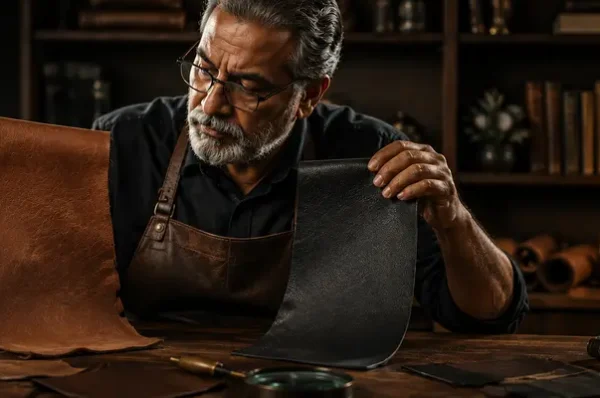
Leather quality can vary significantly from one product to another, even when both products are described as genuine leather. A wallet may feel thick, textured, and natural, while another may feel smooth, uniform, and heavily finished.
The full-grain vs top-grain leather comparison is especially important because these two materials are widely used in premium wallets, handbags, belts, shoes, briefcases, furniture, watch straps, and travel accessories.
Full-grain leather retains the natural outer surface of the hide. It may show pores, wrinkles, scars, colour variations, and other natural markings.
Understanding the difference between full grain and top grain leather can help buyers choose the right material based on durability, appearance, maintenance, budget, and intended use.
This guide explains full grain leather meaning, top grain leather quality, leather hide layers, leather patina development, pricing, authenticity, and the best leather grade for wallets and bags.
What Does Full-Grain Leather Mean?
The full grain leather meaning becomes clearer when the structure of animal hide is understood. Natural hide contains several layers, and the uppermost layer is the strongest because its fibres are tightly packed.
Full-grain leather is made from this complete top layer of hide without sanding away the natural grain surface. The leather may be cleaned, tanned, dyed, conditioned, and finished, but the original grain remains largely intact. Here, check out the leather goods made of full grain leather.
What Is Top-Grain Leather?
Top-grain leather is also made from the upper portion of animal hide. However, its surface is usually sanded, buffed, or corrected to remove noticeable scars, marks, and uneven areas.
The term “top-grain” can sometimes confuse buyers because it sounds as though it must be the highest possible grade. Top-grain leather is high-quality genuine leather, but it is generally considered one level below full-grain leather because part of the natural grain surface has been altered.
Its smoother surface makes it popular for luxury handbags, wallets, macbook sleeve, travel bag, upholstered furniture, car seats, jackets, shoes, and accessories where buyers want a more polished and uniform appearance.
Difference Between Full Grain and Top Grain Leather
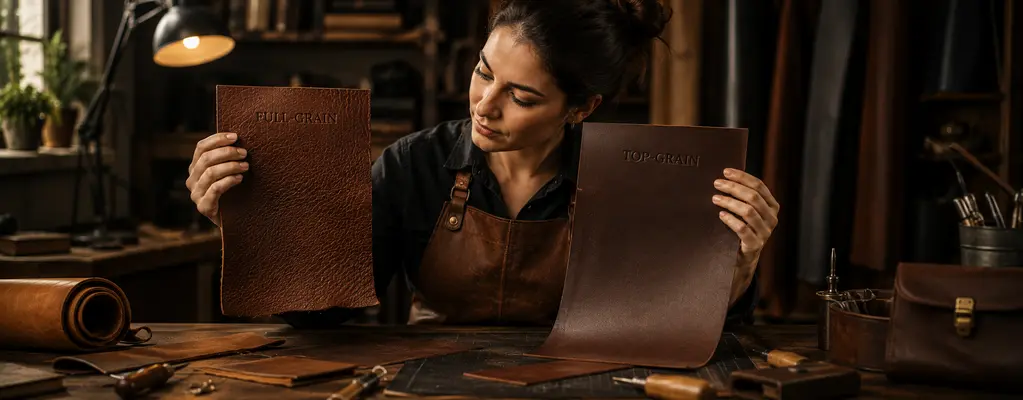
The main difference between full grain and top grain leather is the amount of surface correction.
Full-grain leather keeps the natural grain intact. Top-grain leather is usually sanded or buffed to remove imperfections. This difference affects how the material looks, feels, ages, and responds to maintenance.
Top-grain leather usually appears smoother and more consistent. Sanding removes noticeable variations, while pigments and finishes create a more controlled colour and surface.
Full-grain leather is often thicker because less material is removed from the top layer. Top-grain leather may be slightly thinner and more flexible, depending on the manufacturing process.
The leather finish also differs. Full-grain leather may use light oils, waxes, dyes, or transparent coatings that allow the natural grain to remain visible. Top-grain leather may use stronger pigments or protective layers that produce a cleaner and more stain-resistant surface.
Genuine Leather Grades Explained
The phrase genuine leather grades explained refers to the different ways animal hide is divided, processed, and finished.
Full-grain leather is made from the complete outer grain layer. It retains natural strength, texture, and surface character.
Top-grain leather is also produced from the upper hide layer, but its surface is corrected. It offers a smoother appearance and often requires less maintenance.
Corrected grain leather is more heavily sanded or treated. An artificial grain pattern may be embossed onto the surface after natural imperfections are removed.
Understanding these leather grades helps buyers avoid assuming that every real leather product offers the same performance.
How Leather Grain Affects Quality
Understanding how leather grain affects quality requires attention to the structure of the hide.
The outer grain layer contains tightly connected fibres that provide strength and resistance to wear. When this layer remains intact, the leather is generally better able to withstand bending, stretching, friction, and long-term use.
Full-grain leather preserves this natural fibre structure. As a result, it often performs well in products exposed to daily handling, such as wallets, belts, bags, and footwear.
Top-grain leather retains much of the same strong upper layer, but sanding removes part of the natural surface. The amount removed varies by manufacturer.
The most recognisable full grain leather characteristics are natural texture, visible grain variation, durability, and patina development.
The material often feels dense and substantial. It may be firm when new, but it gradually becomes softer through use.
Top Grain Leather Quality
Top grain leather quality depends on the original hide, the amount of sanding, the tanning process, the dyes used, and the type of surface finish.
High-quality top-grain leather is made from carefully selected hides and receives minimal correction. It can retain much of the strength of the upper hide while providing a smoother appearance.
Lower-quality top-grain leather may be heavily sanded and coated. It may still look attractive, but thick surface finishes can make it feel less natural. At Artisoria, our all products is made of top-notch full-grain oill-pull-up leather.
Full Grain Leather Durability
Full grain leather durability is one of the main reasons the material is highly valued.
Because the natural grain layer remains intact, full-grain leather can withstand repeated handling and friction. A well-made full-grain wallet or bag may remain functional for many years when properly cared for.
However, durability does not depend only on the leather grade. Leather thickness, tanning, stitching, edge finishing, lining, hardware, and product design also affect lifespan.
Leather Tanning Process
The leather tanning process transforms raw hide into stable material that can resist decay and remain flexible.
Vegetable tanning uses natural tannins obtained from bark, wood, leaves, and other plant sources.
Chrome tanning uses chromium salts and is generally faster. It creates leather that is soft, flexible, and available in many colours. Chrome-tanned leather is widely used in handbags, jackets, shoes, upholstery, and fashion accessories.
Which Is Better: Full Grain or Top Grain Leather?
The answer to which is better full grain or top grain leather depends on what the buyer values most.
Full-grain leather may be better for buyers who want maximum natural character, long-term durability, visible grain, and patina development. It works especially well for belts, wallets, travel bags, boots, briefcases, and products intended to age attractively.
Top-grain leather may be better for buyers who prefer a smooth appearance, softer feel, easier maintenance, and greater consistency. It is commonly chosen for handbags, furniture, car interiors, jackets, and shoes.
Read also: Genuine vs Faux Leather: How to Tell Real Leather from Fake
Best Leather Grade for Wallets and Bags
The best leather grade for wallets and bags depends on how frequently the item will be used.
Full-grain leather is an excellent choice for wallets because it handles repeated bending and contact well. A full-grain wallet may feel stiff at first, but it often softens and becomes more comfortable with use.
For bags, full-grain leather offers durability and character. It works particularly well for briefcases, messenger bags, travel bags, backpacks, and structured handbags.
Top Grain Leather vs Full Grain Leather Price
The top grain leather vs full grain leather price comparison generally places full-grain leather at the higher end.
Full-grain leather often costs more because high-quality hides with fewer major defects are required. Since the natural surface remains visible, manufacturers cannot easily hide serious damage through sanding and heavy finishing.
Full-grain leather may also require careful cutting to position natural marks appropriately. Premium vegetable tanning and hand-finishing can increase the price further.
Summary
The full-grain vs top-grain leather comparison is mainly a difference in surface treatment rather than authenticity.
Full-grain leather retains the complete natural grain and usually offers exceptional durability, visible natural markings, and strong patina development. Top-grain leather is sanded to create a smoother, more consistent appearance and may offer easier maintenance and greater stain resistance.
Before buying, examine the grain, leather thickness, finish, stitching, lining, hardware, and overall craftsmanship. Ask for a precise leather grade instead of relying on broad terms such as genuine or premium leather.
The best leather product is not determined by grade alone. It should combine appropriate material, skilled construction, suitable design, honest product information, and proper care.